




Walk this ranch on a still evening and you can feel it. I felt it the first time I set foot on the place, and most people who visit feel it too. Something about this particular stretch of South Texas brush settles on you. That feeling is not imagined. People have been drawn here for a very long time.
There is a reason we named the property Ka Hui ‘Ana, “The Meeting Place.” Not long after I decided to transform it into a hunting ranch, one of the men working for me started turning up artifacts in the dirt. Some of them go back more than 15,000 years. Of all the country in this region, what was found here, and where and how it was found, tells me this ranch was more than just open range. It was a place where people came together. To hunt. To trade. To rest in good country with water and game.
Long before the first Spanish explorers in South Texas ever rode through, this was already a gathering place built around the hunt. And it’s the same reason hunters come here now.
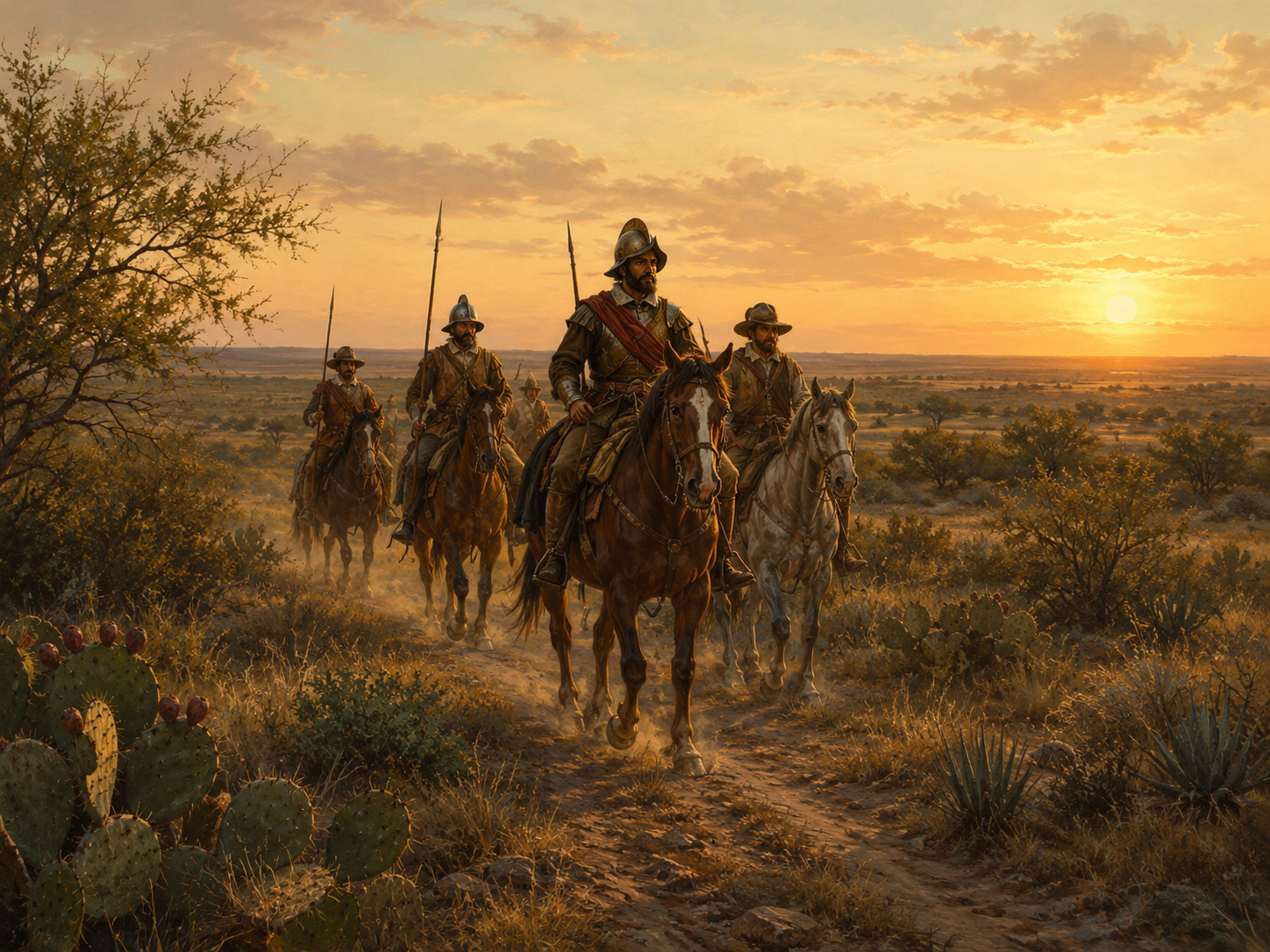
When Spanish expeditions pushed into what is now South Texas in the 1500s and 1600s, they were after routes, water, converts, and control of the northern edge of New Spain. The country south of present-day Cotulla was wild and isolated. Dry creek bottoms, mesquite flats, prickly pear thickets, and open grassland holding deer, turkey, quail, and predators, much the way our brush still does today.
To the Spanish, it was hard country. To the people already here, it was home, and a full larder. The educational resource Texas Beyond History lays out how native peoples read this landscape, moving with the drought, the water, and the seasons.is ranch
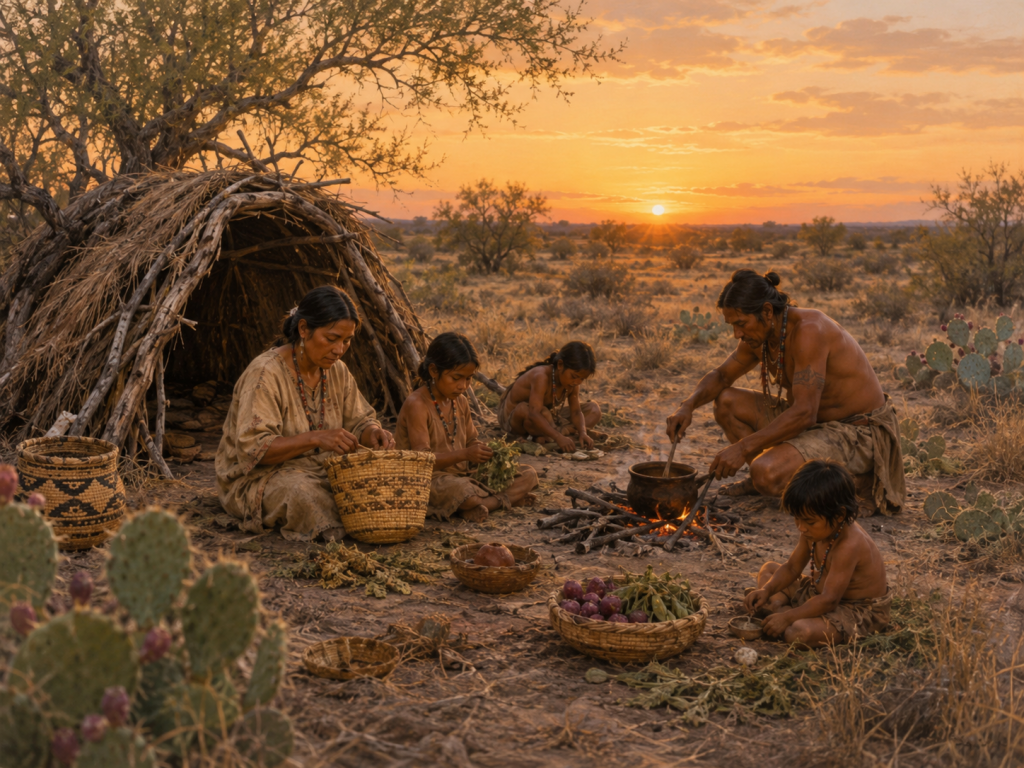
The animals that built this ranch’s reputation were the prize back then too. White-tailed deer and Rio Grande turkey are native to this country and have been hunted here for thousands of years. So has the javelina, which despite the resemblance is not a pig at all, but a native South Texas animal in its own right. Add bobwhite quail and white-winged dove, and the table this land set for native hunters looks a lot like the one our guests sit down to today.
The bands often grouped under the term Coahuiltecan moved through South Texas and northeastern Mexico, following water, game, and the plants that fed them. As the Texas State Historical Association explains, that word does not name one tribe. It covers many small, distinct groups whose knowledge of this country ran deep. They knew where water held in a dry year and where the deer moved at last light.
Stand on this ground and it’s easy to understand why they gathered here. Good water, thick cover, heavy game. The same things that make it a trophy whitetail property now, made it worth meeting on then.
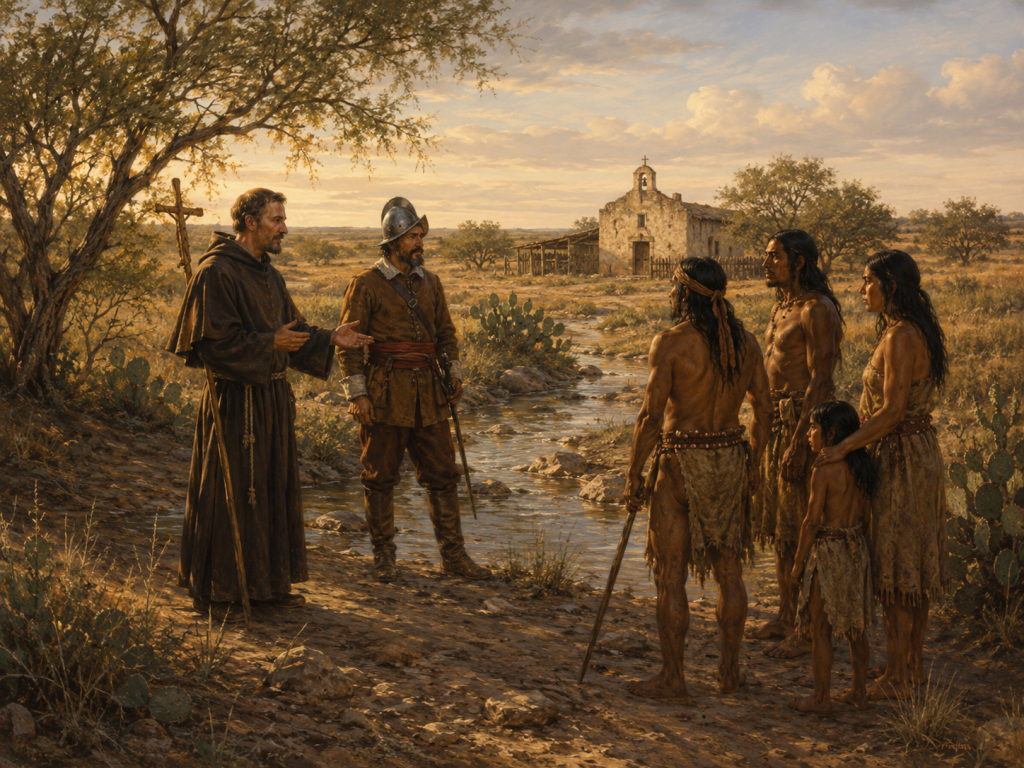
The Spanish changed this country in ways you can still hunt today. They reintroduced the horse, gone from North America for thousands of years, and they brought cattle. And from their earliest expeditions, they brought pigs. Domestic swine that were lost or turned loose on the frontier became the wild hogs that now run the brush across South Texas. The hogs our hunters take on this ranch trace straight back to that arrival.
The missions came with all of it. From the late 1600s into the 1700s, Spanish missions spread north from the Rio Grande and outward from San Antonio, built to fold native people into the colonial system, its religion, and its culture. The Texas State Historical Association and the National Park Service tell that story well. Disease, displacement, and conflict followed, and many of the bands who once gathered on ground like this disappeared within a few generations.
What did not leave was the land, the game, and the pull of this place.
The native peoples of South Texas left no stone cities behind. Their legacy is quieter. Campfire sites under the soil. Arrowheads and spear points that surface after a hard rain. Old travel corridors that became roads and senderos. And artifacts in our ground that say, plainly, people chose this spot for a reason.
I shredded the oil-boom buyout letters because I could feel what this place was. We hunt it and manage it the same way. Stand under a mesquite as the light goes gold, watch a heavy buck ease out of the brush, and the distance between a native hunter and a hunter today gets very short.
If you want to feel it for yourself, that is what we offer: a limited number of exclusive, one-on-one trophy whitetail deer hunts each season, where you are the only hunter on the property. You can also take a doe or hog and any predators you see, on the same land people have hunted on for thousands of years. As we covered in our look at the native history of the Millett, Los Angeles, and South Texas region, the human story here runs deep. Book a hunt, or reach out and let’s talk. The Meeting Place has been calling people to this land for a very long time. I would be honored to share it with you.
