

The Final Weeks of Antler Growth in South Texas
What Late August Tells Us about velvet, hardening, and the buck a hunter might see this fall.
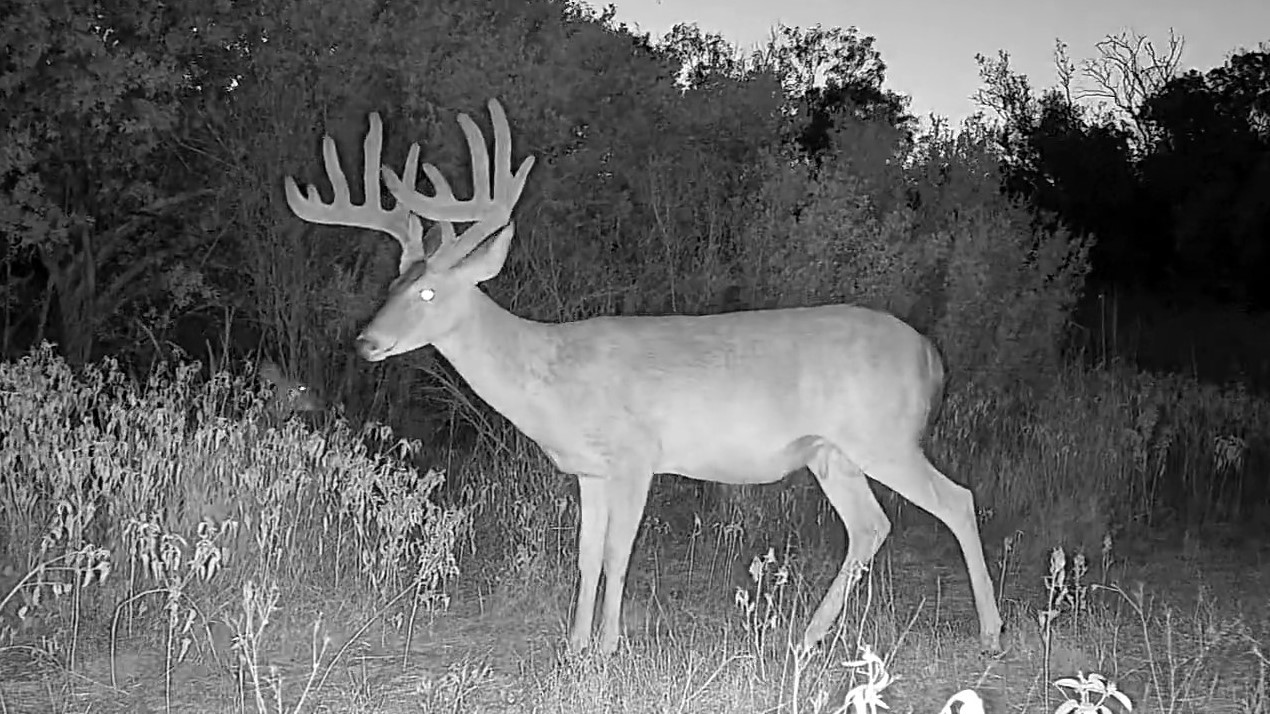
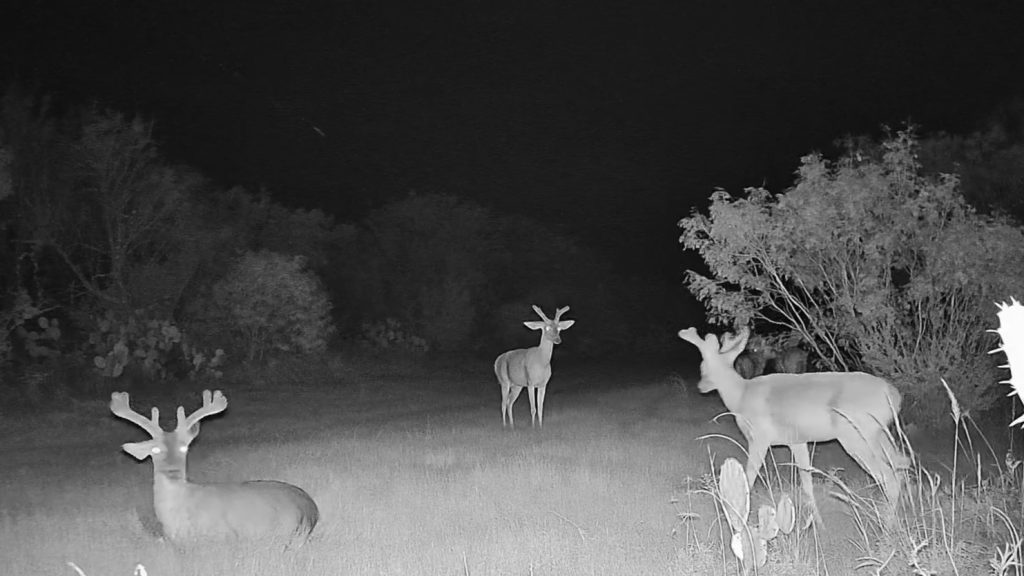
Late August is one of the most revealing times of the year to watch a South Texas whitetail buck. The antlers are still soft-looking under velvet, bachelor groups may still be together, and the deer can appear almost unchanged from one game-camera check to the next. But biologically, a great deal is changing.
As of August 31st here in South Texas, most mature bucks are at or very near the end of the year’s antler-growing phase. The rack we see now is generally the rack the buck will carry into hunting season. What remains is less about adding inches and more about finishing the job: mineralizing the antler, reducing blood supply to the velvet, and preparing for the transition to hard antler.
That makes this a useful point in the calendar for anyone who follows individual deer from spring into fall. The uncertainty of May and June is largely gone. By late August, frame, tine length, spread, and much of the mass are visible well enough to begin comparing this year’s antlers with what we have seen from the same buck in prior years.
What Is Happening to Antlers Right Now?
During spring and summer, a buck’s antlers are among the fastest-growing tissues in the animal. Mississippi State University’s Deer Ecology & Management Lab notes that adult whitetail antlers can grow as much as roughly 1½ inches per week during peak growth. But that rapid pace does not continue through the end of summer. Growth slows dramatically as mineralization is completed.
The velvet is not simply a fuzzy covering. It is living, highly vascular tissue that helps deliver nutrients to the developing antler. Underneath it, cartilage and developing bone are progressively converted into the hardened structure the buck will carry through the fall and breeding season.
Texas Parks and Wildlife Department describes the same broad sequence: once the rapid-growth period is over, antlers begin to harden beneath the velvet; by September, the fully developed antlers have hardened and changing hormone levels cut off the velvet’s blood supply. TPWD’s overview of white-tailed deer antler development provides a useful Texas-specific reference for that transition.
Late-August Velvet Does Not Mean the Rack Is Still Growing Rapidly
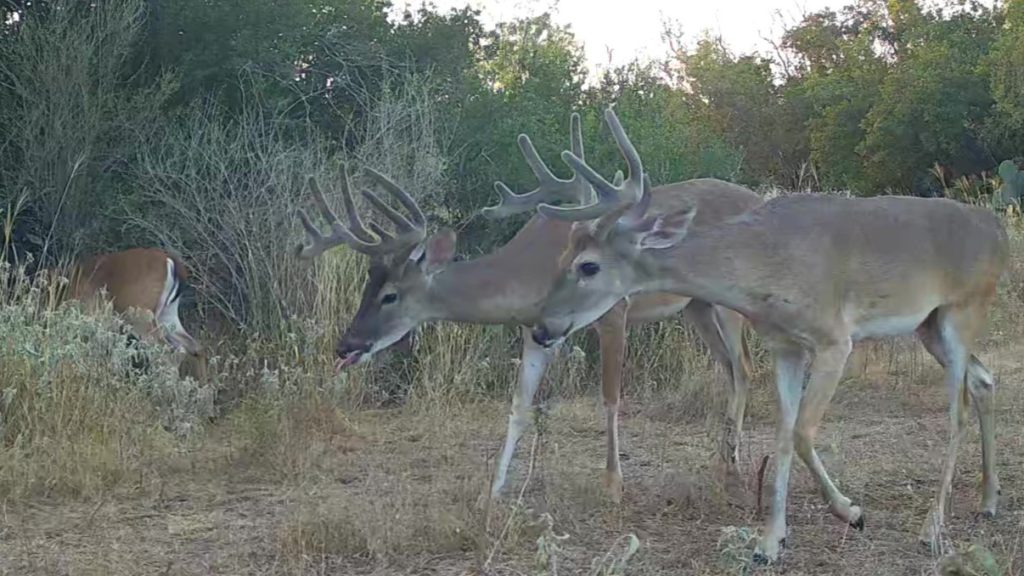
This is probably the most useful distinction to make in late August. A buck can still be fully in velvet and yet have little meaningful antler size left to add. The presence of velvet tells us the hardening process is not complete; it does not tell us that the rack is still in its June or July growth phase.
That is why a mature buck on camera in the last week of August may look nearly identical from one week to the next. The major architecture has already been established. What is changing is happening largely within the antler: mineral deposition continues, the outer compact bone becomes stronger, and the vascular system that supported growth begins shutting down.
Once blood flow to the velvet is sufficiently restricted, the velvet dries and loosens. Bucks then remove it by rubbing and thrashing vegetation. The change can seem sudden. A deer that appears in full velvet on camera may show up a short time later with clean, hard antlers.
How We Got Here: The South Texas Antler Calendar
The exact timing varies among individual bucks and from year to year, but the annual pattern is remarkably consistent. Age, nutrition, rainfall, health, and local conditions can move an individual deer ahead or behind the average. The percentages below should be read as a practical field estimate of how much of the year’s final antler size is typically visible—not as a laboratory measurement.
Month | Typical stage | Approx. final size visible |
February | Many mature bucks are shedding or have recently shed. | 0% |
March | Pedicles heal and early velvet growth begins. | 0–5% |
April | Beams extend; brow tines and early frame become visible. | 10–25% |
May | Rapid growth; beams lengthen and tines become distinct. | 30–50% |
June | Peak growth period; the basic frame becomes easier to read. | 60–75% |
July | Antlers look increasingly complete; tine length and mass continue developing. | 80–95% |
August | Growth finishes; mineralization and hardening become the dominant processes. | 95–100% |
Late Aug.–September | Velvet dies and is shed; hardened antlers emerge. | 100% |
The percentages are intentionally broad. Published wildlife sources describe stages and timing rather than assigning a precise percentage of final antler size to each date. For practical game-camera work, however, the ranges help explain why a buck that changes dramatically between May and June may change very little in apparent size between mid-August and early September.
Age, Nutrition, and Rainfall Still Matter
The calendar tells us where a buck should be in the annual cycle, but it does not tell us how large his antlers should be. Antler size is strongly influenced by age, nutrition, and genetics. Texas Parks and Wildlife Department research at the Kerr Wildlife Management Area notes that antler size generally increases as a buck matures, with peak growth commonly occurring around five to seven years of age under normal conditions.
Nutrition is equally important in South Texas, where rainfall can change forage quality dramatically from one year to the next. We have discussed this in our earlier Ranch Journal article on spring and summer nutrition for white-tailed deer. That connection matters because the rack visible in August is, in many ways, a record of what the buck had available to him through the spring and summer growing period.
A mature 6½-year-old buck and a 3½-year-old buck can therefore be at the same biological stage on August 25th while carrying very different antlers. The older buck has largely completed skeletal growth and can devote more resources to antlers. A younger buck is still allocating nutrients to body development as well as antler growth. That is one reason we try not to evaluate a deer by antlers alone.
What Late August Lets Us Learn From Game Cameras
From a management standpoint, this is when summer observation begins becoming much more useful. Earlier in the season, it is easy to overreact to a buck that appears behind another deer simply because their antlers are developing at slightly different rates. By late August, most of that timing difference has narrowed.
Now we can look more confidently at the frame that actually developed: main-beam length, tine configuration, spread, symmetry, mass, and any unusual characteristics. If we have previous years of photographs of the same animal, late August also gives us one of the best opportunities to compare year-to-year development before behavior changes and bachelor groups begin breaking up.
That does not mean every August photograph answers every management question. Body characteristics, known age, prior camera history, health, and TheRanch’s long-term herd objectives still matter. But the deer we are watching now are no longer rough sketches of what they may become. They are very close to the finished version.
The Next Change Will Be Easier to See
For most of the summer, antler growth is measured by what appears from week to week: another inch of beam, a tine that suddenly becomes obvious, more mass taking shape. Late August is different. The important changes become less visible until, almost at once, they become unmistakable.
Velvet tightens and dries. A buck begins rubbing. The soft gray-brown rack we have watched all summer turns into hard antler. Bachelor-group behavior starts changing as fall approaches. And the deer that has been developing quietly through the South Texas heat begins to look like the buck we will recognize during hunting season.
That is where we are now at TheRanch at Camp Ka Hui ‘Ana: not really waiting to see how much more antler a mature buck will grow, but watching the final transition from summer growth to a completed fall rack. In another few weeks, the velvet will be gone. The story that began in early spring will be written in bone.
ABOUT THE AUTHOR
related posts